Heritage Careers Week, which runs from 5-9 October 2026, shines a spotlight on the diverse and rewarding careers that help care for, protect and celebrate Scotland’s heritage.
Delivered by Historic Environment Scotland in partnership with Developing the Young Workforce (DYW) and employers from across the heritage sector, the week connects people with professionals working in a wide range of roles and organisations throughout Scotland.
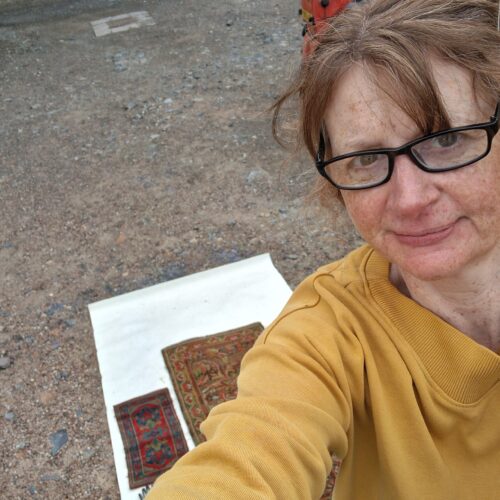
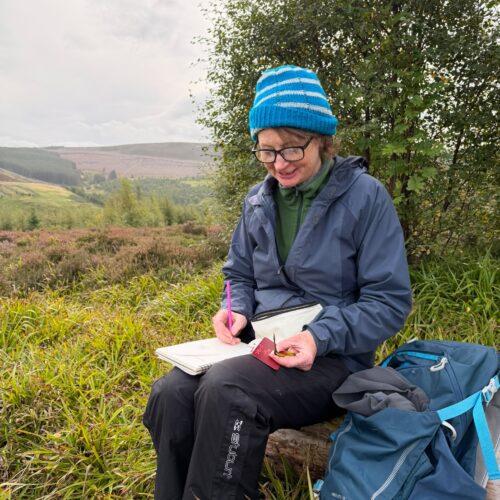
We asked members of the NESPT team to share their career pathways in heritage to inspire the next generation.
What is your role, and what does a typical day at work look like for you?
A typical day for me can vary between being office based carrying out research, filling in funding applications, providing advice and guidance to other organisations, to travelling around the north east for site visits and working with colleagues.
How did you get into working in heritage?
I loved history from an early age. As a teenager I worked in the café at the Weald & Downland Open Air Museum in West Sussex. The museum rescued historic buildings from demolition and rebuilt them on their museum site.
Being able to walk around the buildings and learn about their history ignited my passion for built heritage. I knew from then that working in heritage was something I wanted to do.
From there I studied economic and social history at university, followed by a masters in town planning.
After many years working in planning, I decided to head back to university in my late 30s to study for an MSc in Building Conservation. This enabled me to work as a heritage consultant in the private sector and for organisations such as the National Trust for Scotland, and now the NESPT.
What do you enjoy most about working in the heritage sector?
I enjoy being able to visit, work on and care for historic buildings, helping to bring them back into use where needed. I love learning about the history and stories associated with historic buildings and understanding people’s connections to them.
What’s one project, building, discovery or moment you’ve worked on that is particularly memorable, or you’re particularly proud of, and why?
I am particularly interested in historic churchyards and memorials. We can learn so much from them; about the people who lived before us, social and economic change, architectural styles, fashions in memorialisation, methods of construction, history and archaeology etc.
When I started with the NESPT, the first project I was involved with was the repair and restoration of the Elyza Fraser Mausoleum at Cluny Kirkyard. Being able to work on the beautiful mausoleum building, which has so many stories to tell, has been particularly memorable.
What advice would you give to someone considering a career in heritage?
Everyone has a different career journey into heritage. I am a great believer in no experience is ever wasted, so even if your career path takes twists and turns to get you to your chosen career, everything you do in your career will put you in a stronger position for the next step.
The heritage sector is broad, from hands on, technical and specialist work, stonemasonry, surveying, historical research, architecture, construction, university study or apprenticeships.
Join an organisation such as the Institute of Historic Buildings (IHBC), sign up for free CPD events (there are lots!) and if you are able to volunteer with a heritage organisation, that is a great start.
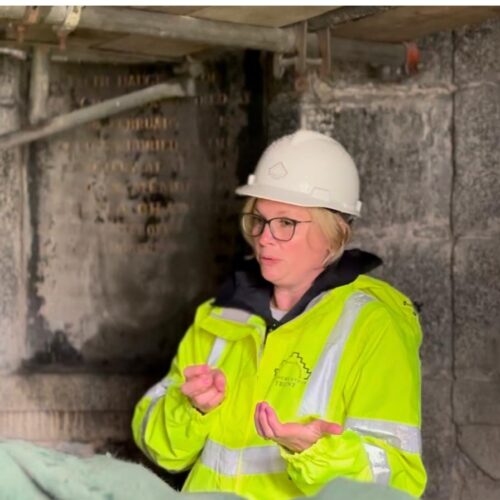


What is your role, and what does a typical day at work look like for you?
As a Heritage Curator at the NESPT, a typical day consists of recording objects as found, within the Trust’s buildings. I handle a wide range of objects, which tell the story of their setting, most recently a harbour pottery and historic warehouse. I photograph and catalogue each one, then label and pack, finally moving them carefully to storage.
Some days I arrange to see a visitor who can tell me fascinating stories of their heritage connection to the building, or welcome a volunteer group.
How did you get into working in heritage?
I loved heritage from an early age, even though I didn’t understand the word until much later. I chose and enjoyed subjects which took me down a cultural, history and art history route and worked seasonally in tourism. Admin roles provided a path into more opportunities until I became an administrator for a heritage oral history project with an adult education charity.
I didn’t have a clear plan for getting into the heritage sector but building a range of transferrable skills and being open minded as to where opportunities were, gave me my break.
Visitor attractions are great for building knowledge and people skills, and charities offer diverse and varied roles.
What do you enjoy most about working in the heritage sector?
Heritage surrounds us every day. I love the direct connection of the job to the real world. Heritage connects all people and our natural environment. For example, I now work in a building yards from the sea, created to store, import and export goods over two centuries ago. These included grain from the land, fish from the marine environment and Portsoy Marble hewn from the cliffs, a serpentine rock throw away.
The working life of people and the natural environment all come together in this combination of built, cultural and industrial heritage. In the present day the NESPT is restoring the buildings to have a new life within the community. For me, it doesn’t get better than that.
What’s one project, building, discovery or moment you’ve worked on that is particularly memorable, or you’re particularly proud of, and why?
Within our buildings we found a beautiful life-size animal sculpture carved from stone, and were keen to learn it’s history. People in the community joined in our quest for information and we pooled their help and the skills of the team in researching archives, and most importantly speaking to folk.
We made incredible discoveries about the young local woman sculptor working in the 1960s, who was highly regarded.
For our Retail Manager Susan, all the speaking to folk in our shop paid off, and led her to track down the artist, and speak to her on the phone across the Atlantic. Hearing the voice of the modest woman in her 80s, across thousands of miles, saying she didn’t think she’d done anything special was incredibly moving and unforgettable. I felt particularly proud to witness the community’s keenness to help, and their determination to reach out to an unsung local hero.
What advice would you give to someone considering a career in heritage?
Doing any one thing leads to the next thing. Just try some routes and you will discover your likes and dislikes, your strengths and crucially meet folk in the heritage field. There are many avenues so just do something! For example, outside my job I volunteer in nature conservation. I learn about trees, which helps me when I’m looking at furniture and wood types. I learn heritage skills such as hedge laying, using traditional hand tools, which helps me to identify tools in an old industrial workshop in my job. Volunteering in nature also led me to volunteer with museum heritage collections, as many organisations and trusts look after both.
Too young or time-poor to volunteer? Look out for a local heritage group and go to their talks, meetings or contribute to their social media groups. Are there are short or part-time courses you could research? There are many distance learning options with colleges and universities.
Visit places. We are fortunate to have a huge amount of visitor attractions, museums and heritage sites, many of which are free. Pay attention to how they present their collections. How would you do it? Is it interactive, engaging, interesting? What story is it telling you? Speak to the people who work or volunteer there – how did they get into it? These people want to help – they are proud of their work so don’t be afraid to ask questions.